Movement without ceremony
Changing position should be quiet, stable and easy enough to become part of the working day—not a feature you stop using.
Why SSDesk exists
It should move when you need it, hold steady when you do not, and give every screen, cable and tool a deliberate place.
The starting point
That division is where most workspaces begin to feel improvised. A good desk arrives, then the monitor arm, dock, power strip and cables are added one by one. Each item may work; the workspace as a whole rarely feels resolved.
SSDesk starts with the complete picture. We consider the room, the movement of the frame, the equipment on the surface and the connections beneath it—then shape them into one practical system.
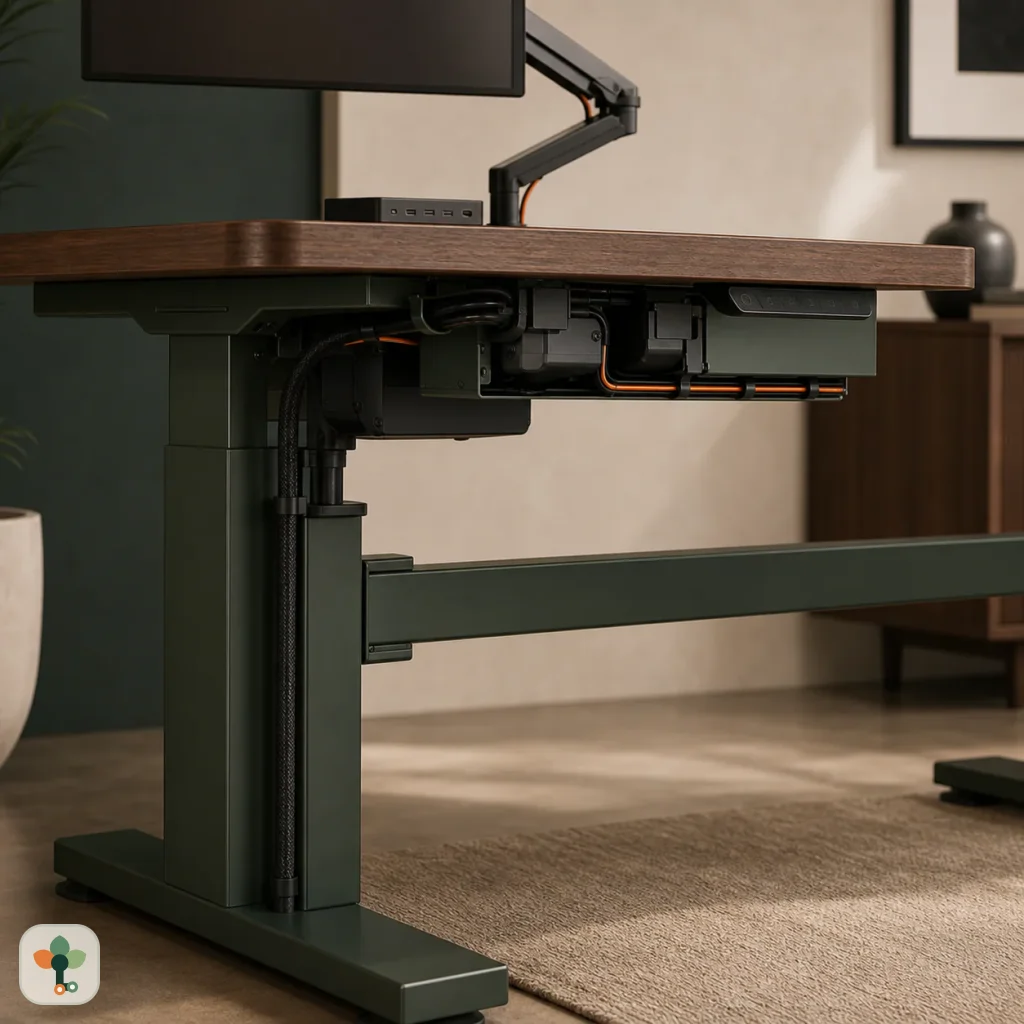
What we are building
Not abstract values—a set of choices you can see and feel in the finished setup.
Changing position should be quiet, stable and easy enough to become part of the working day—not a feature you stop using.
Every dock, power supply, controller and cable needs a logical place, enough room to move and a clear path for maintenance.
Wood brings warmth and individuality; steel brings control. The result should sit naturally in the room and age with character.
The SSDesk standard
Measure the available space, power positions, working distance and equipment before recommending a desk.
Check stability, reach and cable travel at sitting height, standing height and every useful position between them.
Connections should stay understandable and reachable without undoing the entire workspace.
Position, connect, route and adjust the setup so the first task can begin without another round of assembly.
The long view
The goal is a workspace that continues to make sense after the first week: comfortable to move through, straightforward to maintain and composed enough to belong in the room.